


How Are Building Material Exhibitions in Mumbai Changing the Way Architects Discover New Materials?
Picture an architect with a client meeting at four. She's got a mood board, a PDF catalogue, and a sample that arrived two weeks late. The stone in the photo looked warm and honey-coloured. The one in the box looks grey.
Everyone in the profession has lived some version of that. Screens lie a little. Materials don't. That's a big reason building material exhibitions in Mumbai have become such a regular stop on an architect's calendar.
Everyone in the profession has lived some version of that. Screens lie a little. Materials don't. That's a big reason building material exhibitions in Mumbai have become such a regular stop on an architect's calendar.
Touching beats scrolling
Websites can show you a surface. They can't tell you how it feels under your palm, how it takes light at five in the evening, or how heavy a panel really is when you lift it.
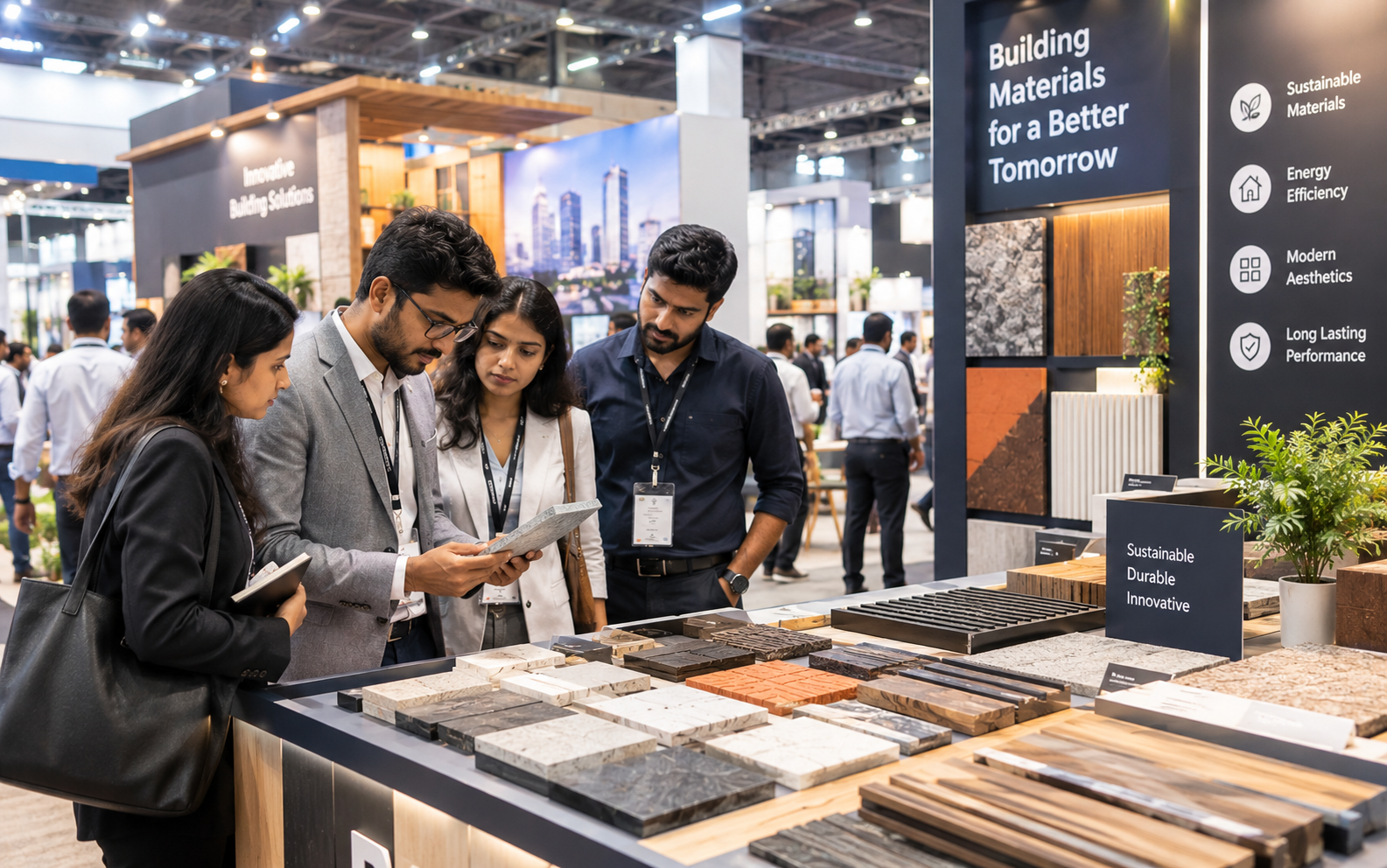
At an exhibition, you pick things up. You run a thumb across a textured laminate. You knock on a timber panel to hear it. You hold two tile samples against a window and see which one holds its colour. Ten minutes of that can settle a question that three weeks of emails couldn't.
At an exhibition, you pick things up. You run a thumb across a textured laminate. You knock on a timber panel to hear it. You hold two tile samples against a window and see which one holds its colour. Ten minutes of that can settle a question that three weeks of emails couldn't.
Everything under one roof
Think about how material sourcing usually goes. Call one supplier, wait for a rep, schedule a sample drop, repeat for the next supplier. It eats weeks.
An exhibition flips that. Dozens of brands sit side by side, and you compare them in one afternoon. Flooring next to cladding next to lighting next to glass. You notice combinations you'd never have thought of, simply because two stalls happened to share an aisle.
An exhibition flips that. Dozens of brands sit side by side, and you compare them in one afternoon. Flooring next to cladding next to lighting next to glass. You notice combinations you'd never have thought of, simply because two stalls happened to share an aisle.
The surprise factor
Most architects go in with a list. The best finds usually aren't on it.
You turn a corner and see a recycled-material panel you didn't know existed, or a lime-based finish from a small workshop in Rajasthan, or a lighter, cheaper alternative to the thing you've specified for years. Search engines show you what you already know to look for. Walking an exhibition shows you what you didn't.
You turn a corner and see a recycled-material panel you didn't know existed, or a lime-based finish from a small workshop in Rajasthan, or a lighter, cheaper alternative to the thing you've specified for years. Search engines show you what you already know to look for. Walking an exhibition shows you what you didn't.
Talking to the people who make things
Here's what I think gets undervalued. At a good exhibition, you're often talking to the person who actually developed the product. Not a call-centre script. A real answer to "how does this hold up in monsoon humidity?" or "what's the lead time if I need 400 square metres?"
Mumbai makes that question matter. Salt air, heavy rain and tight site schedules are daily reality here. Hearing straight from a maker how a material behaves in those conditions saves expensive mistakes later.
Mumbai makes that question matter. Salt air, heavy rain and tight site schedules are daily reality here. Hearing straight from a maker how a material behaves in those conditions saves expensive mistakes later.
It's not only about materials anymore
Design rarely stops at walls and floors. That's why furniture exhibitions in Mumbai and architecture exhibitions in Mumbai now draw the same crowd. An architect choosing a facade may also be choosing seating for the lobby, or a lighting system for the atrium.
When these worlds sit together, ideas cross over. A joinery detail from a furniture maker inspires a staircase. A sustainable fabric prompts a rethink of wall panels. Talks and panels add another layer, with practitioners sharing what actually worked on real projects, including the stuff that went wrong.
When these worlds sit together, ideas cross over. A joinery detail from a furniture maker inspires a staircase. A sustainable fabric prompts a rethink of wall panels. Talks and panels add another layer, with practitioners sharing what actually worked on real projects, including the stuff that went wrong.
Sustainability moved from poster to product
A few years back, "green materials" mostly meant a leaflet. Now you can touch low-carbon cement blends, bamboo composites, reclaimed wood, recycled glass and breathable natural plasters. Clients are asking harder questions about carbon and durability, and architects need real answers.
Exhibitions let you quiz suppliers on certifications, sourcing and lifecycle, face to face. It's much harder to dodge a direct question across a table than in an email.
Exhibitions let you quiz suppliers on certifications, sourcing and lifecycle, face to face. It's much harder to dodge a direct question across a table than in an email.
Meeting your peers
Easy to overlook, hard to replace. You bump into a former colleague. A contractor you've used before introduces you to a fabricator. A younger designer asks what you think of a finish, and you end up swapping notes for twenty minutes.
Those conversations don't show up in any schedule, yet many architects say they're half the reason they attend.
Those conversations don't show up in any schedule, yet many architects say they're half the reason they attend.
Making a visit count
A few habits help. Carry a small notebook or use your phone to photograph every stall that interests you, plus the contact card. Note prices and lead times right there, while the memory's fresh. Ask for samples, and ask what the minimum order is. Leave an hour free to wander without a plan.
And go back through your notes within a week. A pile of business cards means nothing if nobody follows up.
And go back through your notes within a week. A pile of business cards means nothing if nobody follows up.
Where Darc Build fits in
Platforms like Darc Build exist because the industry wants this kind of meeting place. Architects, designers, builders and suppliers get to see products, swap ideas and make connections that a catalogue can't provide. If you work in this space, or you're planning a project and want to see what's possible, a visit to Darc Build is a smart use of a day.
Go with a few questions, leave room for surprises, and bring a notebook. Plenty of architects walk out of Darc Build with a material they hadn't heard of that morning, and sometimes that's the one that defines the project.
Screens will keep getting better. Exhibitions will still be where architects go to feel the real thing.
Go with a few questions, leave room for surprises, and bring a notebook. Plenty of architects walk out of Darc Build with a material they hadn't heard of that morning, and sometimes that's the one that defines the project.
Screens will keep getting better. Exhibitions will still be where architects go to feel the real thing.