


How Are Design Exhibitions in India Changing the Way Architects Discover New Materials?
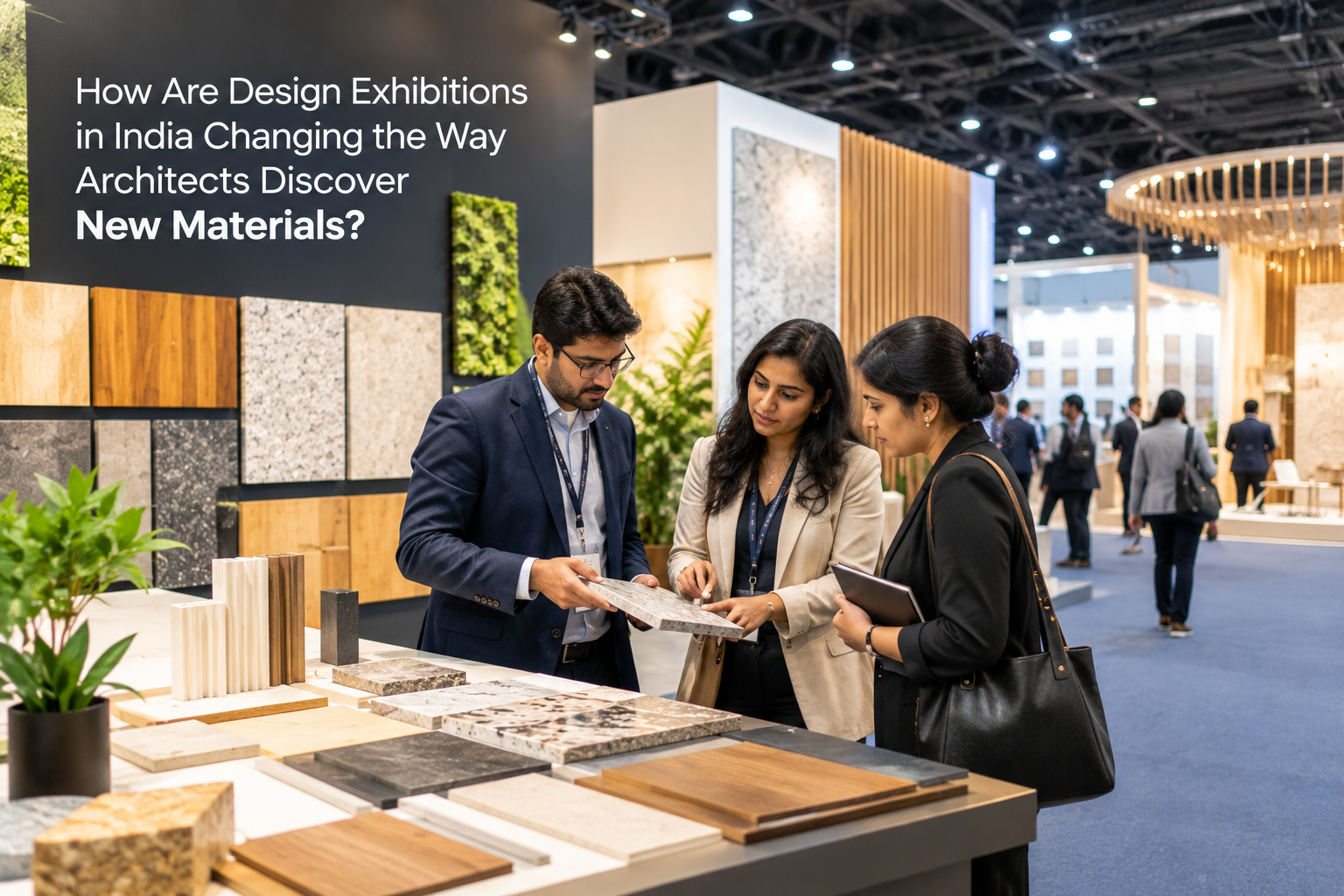
For years, an architect's material library meant a shelf of sample boxes and a list of dealer phone numbers. That habit is changing. Design exhibitions in India now let architects handle full-size panels, watch live installations, compare competing products in one hall and question manufacturers directly, all before writing a specification. The result is faster shortlisting, fewer surprises on site, and earlier exposure to materials such as large-format porcelain slabs, engineered stone, acoustic panels, prefabricated wall systems and home automation.
What has changed in how architects find materials?
Discovery used to depend on whoever walked into the studio. A sales representative brought a catalogue, left a sample, and the product either stayed in memory or did not. Exhibitions reverse that. The architect decides what to see, sets the pace and compares options side by side.
Three shifts stand out:
Three shifts stand out:
- Scale: materials appear as mock-up walls, floors and room settings rather than palm-sized chips.
- Context: products are grouped by application, such as facades, wet areas or flooring, so comparison happens naturally.
- Access: stall staff are often technical people who can answer questions about substrates, fixing details and maintenance.
Why does seeing materials at full scale matter?
Many materials behave differently at size. A terrazzo pattern that looks lively on a small chip can feel busy across a lobby floor. A matte black fitting may show water marks that a showroom photo never reveals. Full-scale displays help architects judge pattern repeat, joint visibility, colour shift under warm and cool light, and how a surface feels underfoot. Without that, these details tend to surface after installation, when changing course is costly.
How do exhibitions help with specification, not just inspiration?
The most useful stalls are technical as well as visual. At design exhibitions in India, architects can ask for test certificates, fire ratings, slip resistance data, installation guides and CAD or BIM files on the spot. Collecting these at the stall saves weeks of emails later.
Questions worth asking any exhibitor:
Questions worth asking any exhibitor:
- Is this product stocked in the region where my project is located?
- What substrate and fixing system does it need?
- Is there a completed project nearby that I can visit?
- What is the realistic lead time for a project-sized quantity?
Where does Delhi fit in?
Delhi is a practical base for architects working across North India, with trade shows covering construction, furniture and interiors. One example is Darc Build, a design, architecture, building and construction exhibition organised by Zion Exhibitions. It arranges its floor into themed arenas such as Tile & Marble, Design & Décor, Smart Home, Rapid Construction and AI, 3D & Startup, alongside conferences and design awards. For an architect, a show that combines an interior exhibition in Delhi with structural and technology products means fewer separate trips and one place to compare across categories.
How should architects plan an exhibition visit?
Go with live projects in mind. Bring drawings or a list of open specification gaps, check the exhibitor list in advance, and book time with manufacturers you are seriously considering. Photograph product codes, not just products. Take junior team members along too; walking an exhibition floor is one of the quickest ways for them to build material knowledge.
What do companies and small businesses gain?
For manufacturers and suppliers, design exhibitions have become a direct route to the specifiers who decide what gets built. A small brand with a strong product can reach architects without a large field sales team. The condition is preparation: stall staff must be able to answer technical questions, not just hand out brochures.
What mistakes should visitors avoid?
- Treating the visit as casual browsing instead of research.
- Collecting samples without noting which project they are meant for.
- Specifying a product before confirming regional supply and after-sales support.
The bigger shift
Material discovery is moving away from the sales pitch and towards the architect's own investigation. When specifiers can compare, test and question in one place, they choose with more confidence, and brands with genuinely better products get noticed on merit.
Platforms like Darc Build are built to support exactly this shift, giving architects the space and access to make better-informed material decisions.
Platforms like Darc Build are built to support exactly this shift, giving architects the space and access to make better-informed material decisions.