


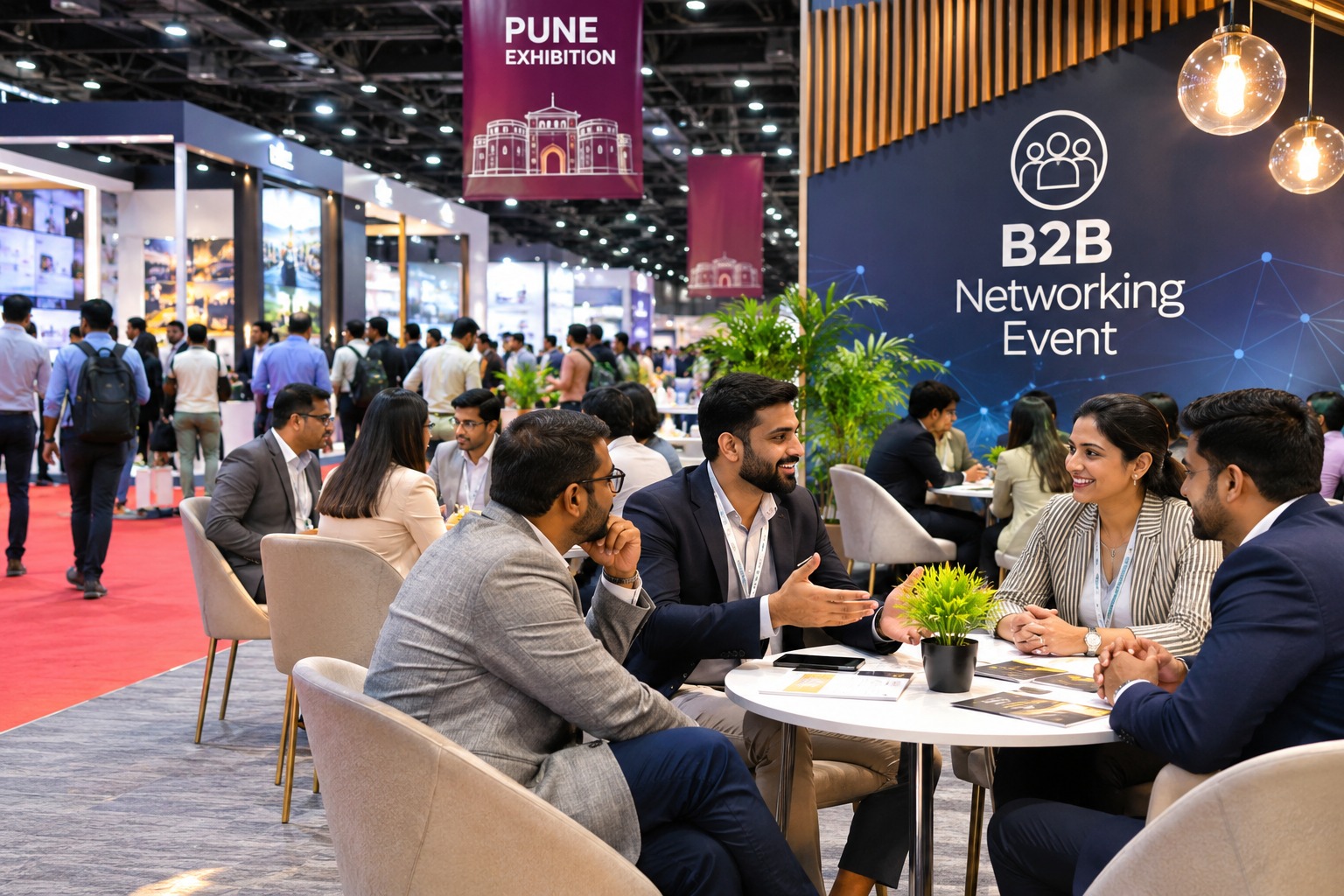
Exhibition in Pune: Are B2B Networking Events Becoming More Valuable Than Traditional Trade Fairs?
For many businesses, yes, but they do not replace trade fairs. Smaller, curated B2B formats such as buyer-seller meets, dealer meets, architect evenings and invite-only product launches often produce better conversations per hour, because the people in the room have already been filtered. Traditional trade fairs still win on breadth: products shown at full scale, leads you would never have found otherwise, and a snapshot of the whole market in a few days. Whether you are weighing an exhibition in Pune or a national show in Delhi, the useful question is not which format is better overall. It is which one suits your product, your sales cycle and the buyer you need to reach.
What is the difference between a B2B networking event and a trade fair?
A trade fair is built around open halls, rows of stalls and visitors who walk in. A B2B networking event is smaller and often invite-only or screened at registration. It is organised around scheduled meetings, panel discussions, dinners or one-to-one sessions. Put simply, a fair maximises reach, while a networking event maximises relevance.
Why networking formats are gaining ground
Senior buyers have less time. A procurement head or principal architect may skip three days in the halls but attend one focused evening.
- Attendees are pre-qualified, so less time goes to catalogue collectors and casual browsers.
- Conversations go deeper, into specifications, delivery terms and project timelines, rather than a two-minute stall pitch.
- Setup is lighter. A table and a few samples can replace a fully built stall.
Pune makes this especially relevant. The city's buyer base mixes industrial companies around Chakan and Pimpri-Chinchwad, IT and office occupiers, and active residential developers. A seller targeting one of those groups often gains more from a room full of the right twenty people than from a hall of thousands.
Where traditional trade fairs still win
Some products simply need floor space. You cannot demonstrate a concrete pump or a compact excavator over dinner, which is why a construction equipment exhibition remains the natural home for machinery makers. The same goes for a building material exhibition, where buyers want to touch tiles, test hardware, open window systems and see facade panels at full height.
Fairs also help with discovery. Buyers find suppliers they had never heard of, and exhibitors meet buyer types they did not know were interested. A walk around the halls also shows you what competitors are launching, which no networking dinner will.
Which format suits your business?
A trade fair usually makes more sense if your product needs demonstration, you are entering a new region, or you sell to many different buyer types. A networking event usually makes more sense if you sell high-value, low-volume solutions, your buyers are a small and known group, or you need dealers in one specific territory.
Before you commit budget to any exhibition in Pune, ask the organiser three things. What does the visitor registration data show by profession and seniority? Is there a hosted buyer programme or a system for pre-scheduled B2B meetings? How much of the floor will your category occupy?
The hybrid model many shows now use
The line between the two formats is blurring. Larger events increasingly combine exhibition halls with conferences, awards and curated meetings. Darc Build, a design, architecture, building and construction exhibition organised by Zion Exhibitions with editions in Delhi and Bengaluru, is one example. It pairs themed arenas such as Tile & Marble and Smart Home with conferences and design awards. Formats like this, along with Design exhibitions that run talks for architects, let exhibitors get reach and structured conversations at the same event. For Pune-based firms with national customers, travelling to a show like this can be worth comparing against local events.
Mistakes to avoid when choosing
- Judging an event by footfall alone, rather than by who attended
- Going to a networking event without a clear ask, such as a dealer, a specification or a pilot order
- Treating a trade fair as display only, without pre-booking meetings
- Having no follow-up system, which wastes either format
Picking the format that pays back
Neither format wins automatically. Track the cost per qualified conversation and what each event leads to over the next three to six months. Most businesses end up with a mix: one or two large fairs for visibility and discovery, and smaller networking events for the buyers they already know they want.
Final Thoughts
Choosing between an exhibition in Pune's trade fair circuit and a curated B2B networking event is not about picking a winner. It is about matching the format to your product, your sales cycle, and the buyer you need to reach. Pre-qualified rooms deliver depth; open halls deliver discovery. The businesses that get the most from either format are the ones that ask organisers the right questions, pre-book meetings, and follow up with a system.
Platforms like Darc Build bring design, architecture, building and construction together, making it easier for businesses to find the right mix of reach and relevance.