


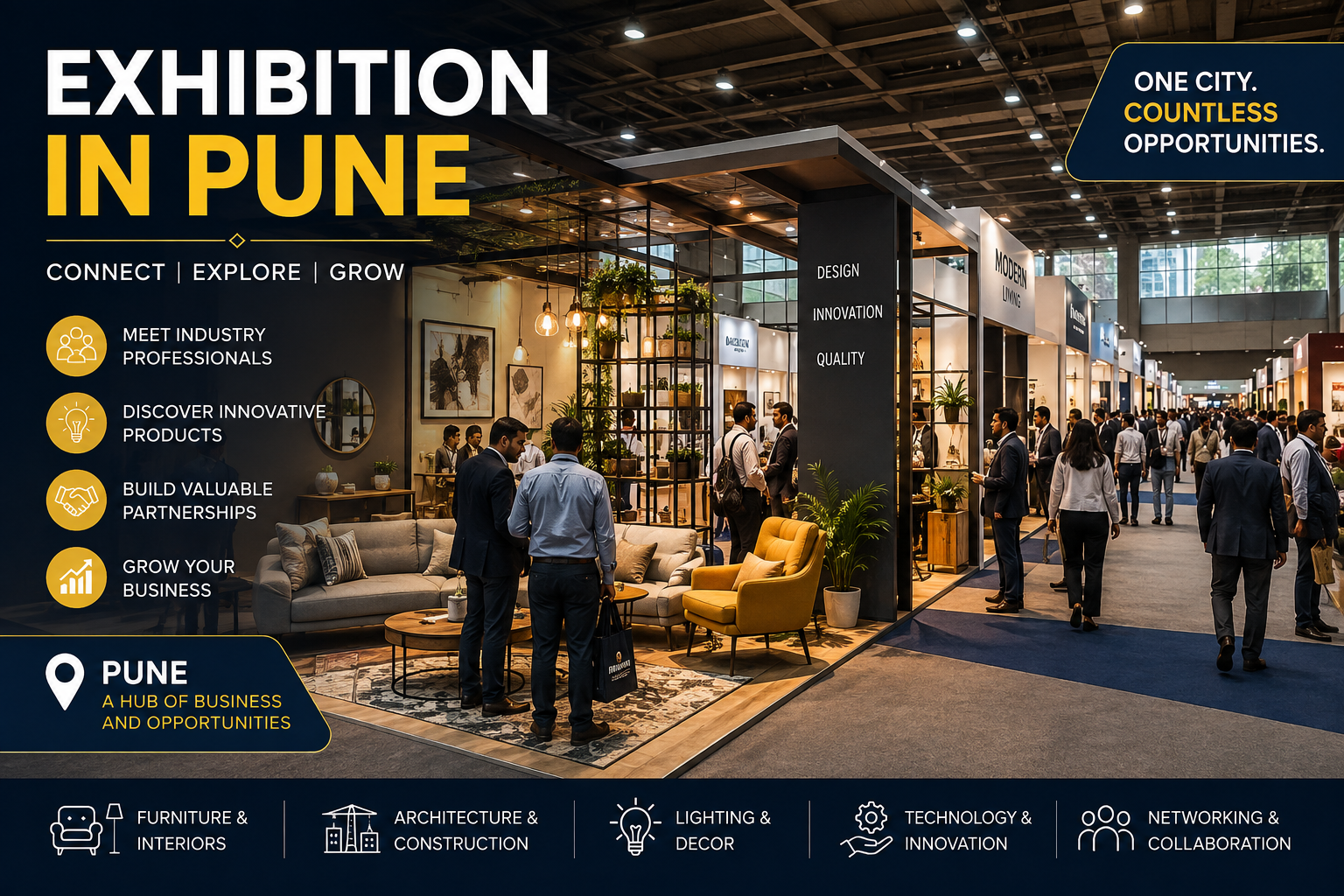
From Product Display to Live Demonstrations: How the Modern Exhibition in Pune Is Changing
There was a time when walking through an exhibition meant looking at things. A tile sample propped against a wall, a sofa roped off so nobody could sit on it, a brochure handed over with a polite smile. You'd take notes, collect a few visiting cards, and figure out the details later over a phone call. That version of exhibitions still exists in pockets, but if you've been to an exhibition in Pune recently, you'll know it's fading fast.
What's replaced it is something far more interactive. Booths now run live demos instead of static displays. Visitors test furniture instead of just eyeing it from a distance. Manufacturers show how a material performs under stress or heat right there on the floor, instead of quoting a spec sheet. Pune, with its fast-growing design and construction scene, has become one of the clearer examples of this shift, and it's worth understanding why it's happening and what it means if you're planning to attend one this year.
What's replaced it is something far more interactive. Booths now run live demos instead of static displays. Visitors test furniture instead of just eyeing it from a distance. Manufacturers show how a material performs under stress or heat right there on the floor, instead of quoting a spec sheet. Pune, with its fast-growing design and construction scene, has become one of the clearer examples of this shift, and it's worth understanding why it's happening and what it means if you're planning to attend one this year.
Why Pune Has Become a Hub for This Kind of Exhibition
Pune isn't new to India's design and construction story, but its role has grown considerably. The city's IT-driven urban expansion has fuelled a steady rise in residential and commercial construction, which in turn has pulled in architects, interior designers, and material brands looking to establish a presence here. That growth has made an exhibition in Pune a genuinely strategic stop, not just a smaller regional add-on to what's happening in Mumbai or Delhi.
Alongside the trade-focused exhibitions, the city has also built a strong creative identity through the Pune Design Festival, which leans more into ideas, artistic concepts, and emerging design thinking than pure product showcasing. Together, these two kinds of events have created an ecosystem where business and inspiration sit side by side, pushing exhibitors to rethink how they present themselves.
Alongside the trade-focused exhibitions, the city has also built a strong creative identity through the Pune Design Festival, which leans more into ideas, artistic concepts, and emerging design thinking than pure product showcasing. Together, these two kinds of events have created an ecosystem where business and inspiration sit side by side, pushing exhibitors to rethink how they present themselves.
Why Static Displays Stopped Working
A few things changed, making the old model feel outdated. Buyers today are far more informed before they even walk into a hall; most have already seen a product online, checked reviews, and compared prices. A static display doesn't tell them anything they don't already know. What actually convinces someone, especially an architect or interior designer specifying materials for a client, is seeing how a product performs, feels, or holds up in real conditions.
There's also a simple attention problem. Exhibition halls are crowded, and a passive booth with a product sitting quietly on a table gets walked past in seconds. A live demo, on the other hand, stops people. Whether it's a modular kitchen fitting being assembled in real time or a flooring material being tested for water resistance right in front of visitors, movement and interaction pull people in a way a static display simply can't.
There's also a simple attention problem. Exhibition halls are crowded, and a passive booth with a product sitting quietly on a table gets walked past in seconds. A live demo, on the other hand, stops people. Whether it's a modular kitchen fitting being assembled in real time or a flooring material being tested for water resistance right in front of visitors, movement and interaction pull people in a way a static display simply can't.
What Live Demonstrations Actually Look Like on the Floor
At a recent exhibition in Pune, this shift was visible almost everywhere you looked. Furniture brands set up seating areas where visitors could actually sit, adjust, and test pieces instead of just viewing them from behind a rope. Smart home companies ran full working setups, lights, locks, and automation panels responding to voice commands or app controls in real time, rather than a poster explaining what the product could theoretically do.
Material suppliers have leaned into this too. Instead of a sample chip of stone or laminate, several booths now demonstrate scratch resistance, heat tolerance, or water resistance live, letting visitors watch (and sometimes try) the test themselves. It's a small thing, but it builds a level of trust a data sheet never could.
Configurator tools have also become a regular fixture, particularly at furniture and modular kitchen stalls. Visitors can adjust dimensions, finishes, and layouts on a screen and see a rendered result within minutes, something that used to take days of back-and-forth with a sales team.
Material suppliers have leaned into this too. Instead of a sample chip of stone or laminate, several booths now demonstrate scratch resistance, heat tolerance, or water resistance live, letting visitors watch (and sometimes try) the test themselves. It's a small thing, but it builds a level of trust a data sheet never could.
Configurator tools have also become a regular fixture, particularly at furniture and modular kitchen stalls. Visitors can adjust dimensions, finishes, and layouts on a screen and see a rendered result within minutes, something that used to take days of back-and-forth with a sales team.
What This Means for Architects, Designers, and Homeowners
For architects, live demonstrations cut down the guesswork that used to come with specifying new materials. Watching how a product performs, rather than relying on a manufacturer's claims, makes it much easier to trust a decision before it goes into a client's project.
For interior designers, this shift has turned exhibitions into genuine working sessions rather than just browsing trips. Being able to test furniture, lighting, and finishes with a client in mind, sometimes literally standing in front of the client, speeds up decision-making considerably.
For homeowners, especially those exploring home decor exhibitions while planning a renovation, live demos make the whole experience far less intimidating. It's one thing to be told a fabric is durable, and another to see someone actively testing it in front of you.
For exhibitors and brands, the shift has raised the bar. A booth that only displays products now risks looking outdated next to competitors running interactive setups, which means more brands are investing in demo-ready stalls rather than simple display counters.
For interior designers, this shift has turned exhibitions into genuine working sessions rather than just browsing trips. Being able to test furniture, lighting, and finishes with a client in mind, sometimes literally standing in front of the client, speeds up decision-making considerably.
For homeowners, especially those exploring home decor exhibitions while planning a renovation, live demos make the whole experience far less intimidating. It's one thing to be told a fabric is durable, and another to see someone actively testing it in front of you.
For exhibitors and brands, the shift has raised the bar. A booth that only displays products now risks looking outdated next to competitors running interactive setups, which means more brands are investing in demo-ready stalls rather than simple display counters.
Where Darc Build Fits Into This Shift
Darc Build has been one of the platforms actively encouraging this move toward interactive exhibitions. Rather than treating Pune as just another stop for static product showcases, the event has consistently pushed exhibitors toward demo-driven booths, configurator stations, and live workshops alongside the standard exhibition format. Combined with the creative energy of the Pune Design Festival, this has made the Darc Build experience in the city feel less like a trade show and more like a working preview of upcoming projects.
For visitors, that translates into a more useful visit overall. Instead of collecting brochures to review later, architects and designers can walk away from a Darc Build event in Pune with a much clearer sense of how a product will actually behave once it's part of a real space.
For visitors, that translates into a more useful visit overall. Instead of collecting brochures to review later, architects and designers can walk away from a Darc Build event in Pune with a much clearer sense of how a product will actually behave once it's part of a real space.
Final Thoughts
The exhibition in Pune has clearly moved past the days of quiet, look-but-don't-touch product displays. What's replaced it is a far more hands-on, demonstration-heavy format that gives architects, designers, and homeowners a genuinely better sense of what they're evaluating. Whether it's furniture you can sit on, materials tested live, or smart home systems running in real time, this shift is making exhibitions more useful, not just more entertaining. If you're attending a Darc Build event in Pune this year, expect to do a lot more than just look around.
Frequently Asked Questions
Why are live demonstrations replacing static displays at exhibitions in Pune?
Buyers today are already well-informed before attending, so a static product display adds little value. Live demonstrations let visitors see real performance and interact directly with products, which builds far more trust than a spec sheet.
Buyers today are already well-informed before attending, so a static product display adds little value. Live demonstrations let visitors see real performance and interact directly with products, which builds far more trust than a spec sheet.
Is the Pune Design Festival the same as a trade exhibition?
Not quite. The Pune Design Festival leans more toward creative concepts and emerging design ideas, while trade exhibitions like Darc Build focus more on products, materials, and business networking, though the two often complement each other.
Not quite. The Pune Design Festival leans more toward creative concepts and emerging design ideas, while trade exhibitions like Darc Build focus more on products, materials, and business networking, though the two often complement each other.
Are home decor exhibitions in Pune useful for someone who isn't a design professional?
Yes. Homeowners planning renovations benefit particularly from live demonstrations, since it's much easier to judge durability, comfort, and finish quality in person than from a catalogue.
Yes. Homeowners planning renovations benefit particularly from live demonstrations, since it's much easier to judge durability, comfort, and finish quality in person than from a catalogue.
Does Darc Build run demo-style booths at its Pune exhibitions?
Yes, Darc Build actively encourages exhibitors to set up interactive, demonstration-based stalls rather than static displays, which has become a defining feature of its Pune editions.
Yes, Darc Build actively encourages exhibitors to set up interactive, demonstration-based stalls rather than static displays, which has become a defining feature of its Pune editions.