


Furniture Exhibition in India: What Are Architects and Interior Designers Actually Looking for in 2026?
43% of designers now name curved, sculptural furniture as a defining trend shaping how spaces are designed this year. That's not a small shift. It signals something bigger: a move away from flat, catalogue-style furniture toward pieces with real material character, texture, and intention.
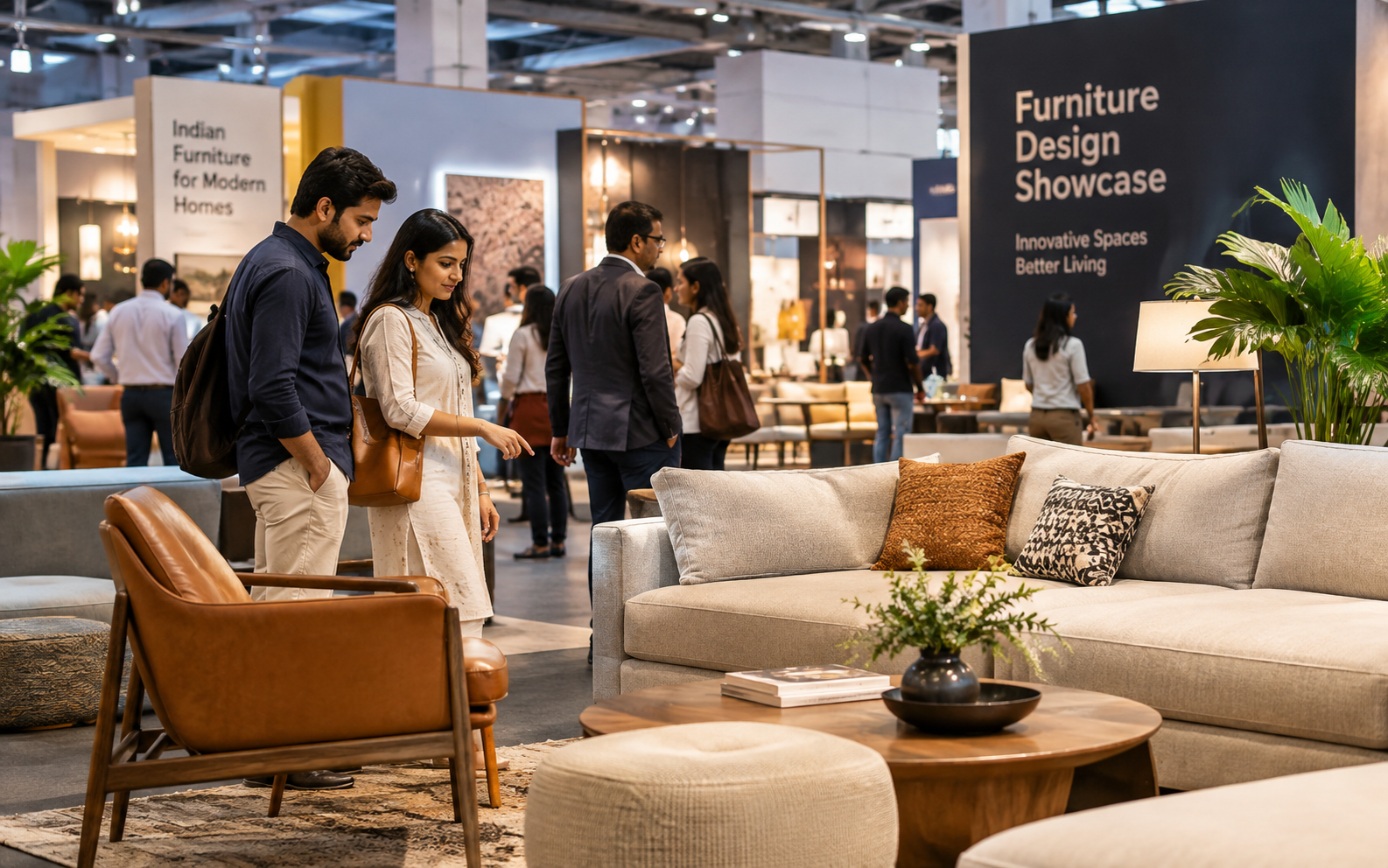
Walk the floor of any major furniture exhibition in India this year, and you'll see this play out in real time. Architects and interior designers aren't just browsing catalogues anymore. They're running their hands over grain, asking about sourcing, and quietly deciding whether a piece has the kind of character that lasts a decade rather than a design cycle.
If you're exhibiting furniture this year, or deciding whether to, this is exactly what's actually driving decisions on the show floor.
Walk the floor of any major furniture exhibition in India this year, and you'll see this play out in real time. Architects and interior designers aren't just browsing catalogues anymore. They're running their hands over grain, asking about sourcing, and quietly deciding whether a piece has the kind of character that lasts a decade rather than a design cycle.
If you're exhibiting furniture this year, or deciding whether to, this is exactly what's actually driving decisions on the show floor.
Craftsmanship Over Catalogue Uniformity
The biggest shift this year is a move away from mass-produced sameness. Designers are increasingly drawn to pieces that show real material honesty, visible wood grain, natural texture, hand-finished detailing, rather than furniture designed to hide every imperfection under a flawless coat of lacquer. At a good furniture expo, this shows up clearly in which stalls actually get repeat visits. It's rarely the flashiest booth. It's usually the one where a designer can pick up a piece and immediately tell it was made with intention.
For manufacturers, this means showing your process as much as your product. A well-finished piece speaks for itself, but a piece with a story behind its material and craftsmanship speaks louder.
For manufacturers, this means showing your process as much as your product. A well-finished piece speaks for itself, but a piece with a story behind its material and craftsmanship speaks louder.
Tactile Finishes Are Doing the Talking
Texture has quietly become one of the strongest selling points at any serious exhibition this year. Designers are actively seeking out fluted and reeded wood detailing, richly grained finishes, and tactile surfaces that catch light differently depending on where you stand. Flat, uniform surfaces are taking a back seat to pieces that reward a second look.
This is one of the clearest reasons exhibitions still outperform online sourcing for furniture. No product photo fully captures how a fluted panel or a hand-finished surface actually feels or reflects light in person. A furniture exhibition in India gives designers exactly that moment, standing in front of the piece, running a hand across it, and deciding on the spot whether it fits the project.
This is one of the clearest reasons exhibitions still outperform online sourcing for furniture. No product photo fully captures how a fluted panel or a hand-finished surface actually feels or reflects light in person. A furniture exhibition in India gives designers exactly that moment, standing in front of the piece, running a hand across it, and deciding on the spot whether it fits the project.
Sculptural, Statement Pieces With a Purpose
Bold, sculptural furniture is back, but not as pure decoration. Architects are specifying statement pieces that also serve a real function within a space, anchoring a room visually while still doing their job as a table, a seating unit, or a partition. Curved silhouettes and organic shapes are showing up far more often than sharp, rigid lines, since designers chase spaces that feel warm and lived in rather than showroom-perfect.
This matters for exhibitors because it changes what gets attention on the floor. A single, well-designed statement piece often generates more serious conversation than an entire catalogue's worth of standard options laid out side by side.
This matters for exhibitors because it changes what gets attention on the floor. A single, well-designed statement piece often generates more serious conversation than an entire catalogue's worth of standard options laid out side by side.
Sustainability and Material Longevity
Designers this year are asking harder questions about where materials come from and how long a piece is genuinely built to last. Furniture with what some are calling heirloom quality, pieces meant to be kept and passed down rather than replaced every few years, is being actively sought after, particularly for higher-end residential and hospitality projects.
For manufacturers exhibiting at a furniture expo, this is worth leading with, not mentioning as an afterthought. If your materials and construction genuinely support longevity, say so clearly on the stall, since it's increasingly one of the first questions serious buyers ask.
For manufacturers exhibiting at a furniture expo, this is worth leading with, not mentioning as an afterthought. If your materials and construction genuinely support longevity, say so clearly on the stall, since it's increasingly one of the first questions serious buyers ask.
Mixed Materials Are Replacing Matched Sets
Buying an entire matching furniture set no longer feels like the goal it once was. Designers this year are actively mixing wood tones, metal finishes, and upholstery textures within the same space, favouring a collected, layered look over a uniform one. A room with white oak flooring, walnut cabinetry, and a lighter wood furniture piece can still feel balanced and intentional, as long as the pairing is thoughtful rather than accidental.
This shift matters at a furniture expo, since exhibitors showing a single cohesive collection may appeal less than those offering distinct, well-made pieces designers can mix and match across a project. Flexibility in how a piece can be styled is becoming as important as the piece itself.
This shift matters at a furniture expo, since exhibitors showing a single cohesive collection may appeal less than those offering distinct, well-made pieces designers can mix and match across a project. Flexibility in how a piece can be styled is becoming as important as the piece itself.
Furniture Exhibitions Aren't Isolated From the Bigger Construction Conversation
Furniture rarely gets chosen in a vacuum anymore. Many of the architects and designers walking a furniture exhibition are the same people sourcing materials at a construction equipment exhibition just weeks earlier or later, since furniture, finishes, and structural elements increasingly get planned together as one cohesive design language for a project rather than separate decisions made months apart.
That's why exhibitions that bring design, furniture, and construction categories under one roof tend to attract a sharper, more decision-ready crowd. Buyers walking these floors aren't just furnishing a room. They're often finalising an entire project's material palette in one visit.
That's why exhibitions that bring design, furniture, and construction categories under one roof tend to attract a sharper, more decision-ready crowd. Buyers walking these floors aren't just furnishing a room. They're often finalising an entire project's material palette in one visit.
Why D-arc BUILD Is Where This All Comes Together
This is precisely the space D-arc BUILD occupies. As a dedicated platform for Design, Architecture, Building, and Construction, it brings furniture, finishes, and construction technology exhibitors together under segregated pavilions, rather than scattering them across unrelated events that force architects and designers to piece together their sourcing across multiple, disconnected shows.
The event runs on curated categories, high-profile international conferences, and dedicated business visitor days, drawing key international players and hosted guests from leading design and construction practices. For manufacturers exhibiting furniture, this means standing in front of the exact audience described above, buyers who are actively looking for craftsmanship, texture, and material longevity, not just browsing for ideas.
If you manufacture furniture and want to understand what architects and interior designers are genuinely responding to in 2026, showing up at the right exhibition tells you more in a single weekend than months of market research. D-arc BUILD is built to be exactly that room.
The event runs on curated categories, high-profile international conferences, and dedicated business visitor days, drawing key international players and hosted guests from leading design and construction practices. For manufacturers exhibiting furniture, this means standing in front of the exact audience described above, buyers who are actively looking for craftsmanship, texture, and material longevity, not just browsing for ideas.
If you manufacture furniture and want to understand what architects and interior designers are genuinely responding to in 2026, showing up at the right exhibition tells you more in a single weekend than months of market research. D-arc BUILD is built to be exactly that room.