


How Furniture Exhibitions in Mumbai Create Business Opportunities?
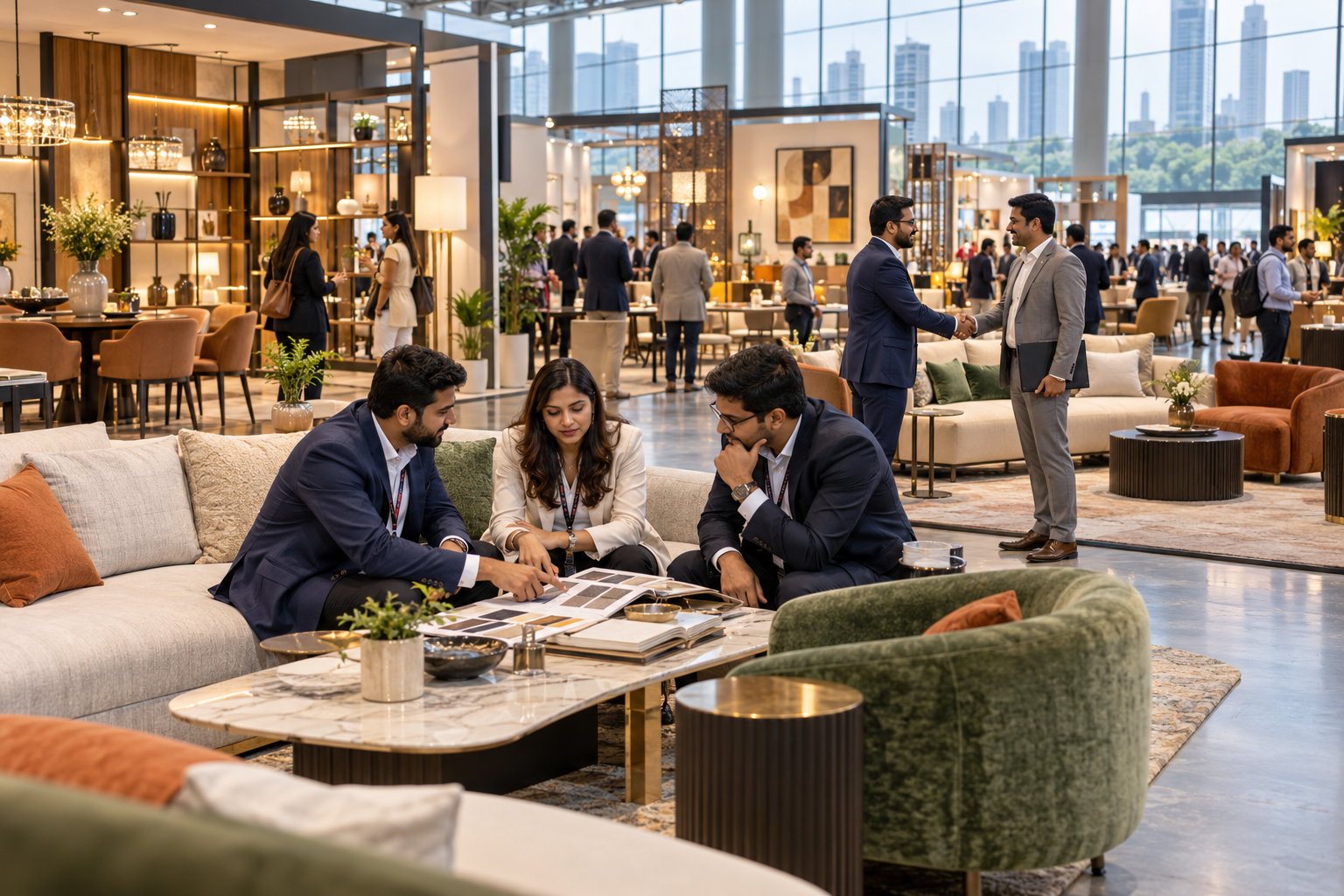
Mumbai has a steady appetite for furniture: compact apartments that need clever storage, offices refitting floors, hotels and restaurants updating interiors, and a large community of architects and designers sourcing for clients across western India. Furniture exhibitions in Mumbai bring much of that demand into one venue for a few days. For manufacturers, dealers and small workshops, that creates practical openings: meeting specifiers, finding distributors, testing new designs with real buyers and picking up project enquiries that rarely arrive through a website form.
Who buys at a furniture show?
The opportunities depend on who walks through the hall. A typical furniture event draws:
- Architects and interior designers specifying for residential and commercial projects
- Dealers and showroom owners looking for new ranges
- Hospitality, office and institutional buyers planning bulk orders
- Developers furnishing sample flats and clubhouses
- Homeowners furnishing a new home
Each group buys differently. A designer may place a small first order to test quality, while a dealer is deciding whether your range will sell in their city for years.
Five kinds of opportunity exhibitors can create
Project specifications
When an architect sees a sofa frame, joinery detail or modular wardrobe system in person, it can end up specified across an entire project. Bring finish samples and custom size options, because designers often ask whether a piece comes in another width before anything else.
Dealer and distributor networks
Shows are where many dealers decide which brands to take on. Keep a clear one-page dealership note ready, covering open territories, display support and lead times.
Bulk and contract orders
Hotel, co-working, school and hospital buyers look for durability, fire-retardant fabrics, consistent supply and after-sales service. These conversations move slowly but tend to be larger.
Honest product feedback
Launching a collection at a show gives instant feedback. Watch which pieces people sit in, touch and photograph, and which ones they walk past.
Collaborations
Neighbouring exhibitors such as lighting, flooring, upholstery fabric and hardware suppliers can become partners for joint displays or project bids.
Why mixed-format shows matter for furniture brands
Furniture is rarely chosen on its own. It sits on flooring, against wall finishes, under lighting, inside a building a contractor is still completing. That is why some furniture brands also exhibit at a building material exhibition in India or at broader construction exhibitions, where developers and contractors source for whole projects.
The buyer timing differs too. Visitors at furniture exhibitions in Mumbai are often furnishing spaces that are nearly ready, while buyers at construction-focused shows may be planning months ahead, which can mean larger orders on longer timelines.
Not every show fits, though. A construction equipment exhibition built around machinery and site plant will draw the wrong audience for a furniture brand, however busy the halls are.
Darc Build is one example of the mixed format: a design, architecture, building and construction exhibition organised by Zion Exhibitions, with editions in Delhi and Bengaluru and themed arenas including Design & Décor and Ultra Luxe alongside tiles, smart home and construction technology. For Mumbai-based brands hoping to reach buyers in North or South India, shows in other cities are worth weighing against local ones.
Questions to ask before booking a stall
- What is the visitor profile, and how many are trade buyers rather than general public?
- Where will the furniture section sit on the floor plan?
- Are there conferences or designer sessions that bring specifiers in?
Mistakes that cost exhibitors
Crowding the stall with every product makes the best pieces disappear. Sending junior staff who cannot discuss customisation or delivery loses serious buyers. Slow follow-up lets warm enquiries go cold; a message within two days that mentions the specific piece a visitor liked does more than a generic catalogue email.
Turning the show into steady business
An exhibition gives a furniture brand concentrated access to the people who influence what gets bought. Bring a focused range, staff the stall with people who can answer real questions, record who visited and why, and follow up quickly. The orders often arrive weeks later, but they begin with conversations on the floor.
Platforms like Darc Build are built to make those conversations happen, bringing furniture brands and serious buyers into the same space.
Platforms like Darc Build are built to make those conversations happen, bringing furniture brands and serious buyers into the same space.